We were ambling down one of the graceful streets, Via Roma or Via Garibaldi, lined with glossy boutiques and well-turned out Turinese with their dogs.
The pedestrian light turned green and I immediately stepped into the road- then my host yanked my arm back, just in time to let a little Fiat whizz by, like every stereotype ever about how undisciplined Italian driving is supposed to be.
What were you thinking?! he said, as we finally crossed with a knot of people.
I thought it was supposed to stop. This is Europe.
You’re not in Switzerland anymore, this is Italy, he admonished me. It’s a lot more like your country!
Not the most favorable comparison to start with.
It was another splendid autumn day, the bright, crisp, gently sunny kind that puts one in just the right sort of mood.
We had parked in the cavernous underground lot near the Piazza Vittorio Veneto and stopped for some ferinata, a fried chickpea pancake piping hot and wrapped in paper, and now I was getting the grand tour of the city.
It reminded me of Paris, the way you could turn a random corner and run face-first into a beautifully constructed building whose architecture you would not be able to identify without a hasty Google lookup, philistine that you are in these matters, but which you could certainly appreciate with every atom in your being, for the long-gone House of Savoy had endowed the city with an infinite legacy of aristocratic opulence.
From the sumptuous Palazzo Madama overlooking Piazza Castello, home of two queens and the very first Senate of the Italian kingdom, to the imposing Palazzo Reale, both royal residences inscribed in the UNESCO World Heritage List, and the Palazzo di Città, seat of the city’s administrative authority since the 17th century, Turin was crammed with timeless masterpieces within walking distance.
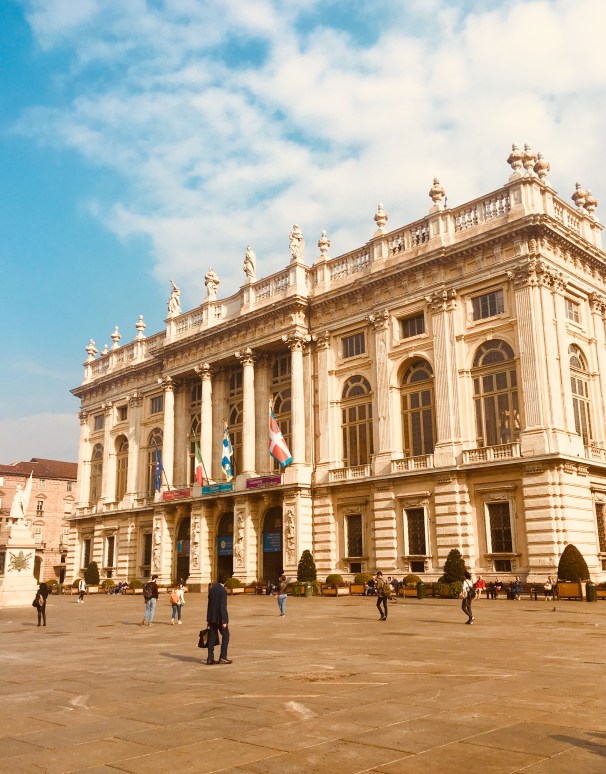
Palazzo Madama
Eventually we reached the Museo Nazionale del Risorgimento Italiano in the exquisite Palazzo Carignano, itself a UNESCO World Heritage site.
Perhaps a fairly odd choice given the wealth of artistic treasures elsewhere – including the second-largest collection of Egyptian antiquities in the world outside of Cairo – but to a nerd like myself it was magical.
This museum was the first of all the Italian museums dedicated to the Risorgimento, and the only one with the honor of carrying the nazionale designation. Its collections included banners and royal standards from the Bonaparte occupation, a loom with the tricolor upon it, and the original manuscript of the national anthem, contemplative portraits of Count Cavour, ornate uniforms and weaponry, impassioned political leaflets preserved for posterity.
We also viewed the regal courtroom, hung with a multitude of intricate pennants, where the first parliament was convened; and I slowly came to the weighty realization that the modern Italian republic, ages past the ancient lupine tale of Romulus and Remus (and certainly quite removed from today’s agitated populist movement), began right here in this royal capital.
Another attraction, well-loved by Catholic pilgrims, was the Shroud of Turin. Housed in the Chapel of the Holy Shroud and only ever displayed by papal decree, it was nowhere in sight when we entered the cool interiors of the Duomo di Torino, though there was a bank of screens all showing stylized animations like a Discovery Channel forensics special in different languages, in a fascinating, unironic juxtaposition of science and religion. Update: The Chapel completed its 28-year renovation in September 2018.
Many members of the royal family were buried in this cathedral, which was dedicated to St. John the Baptist, and remains the seat of the Archbishops of Turin to this day.
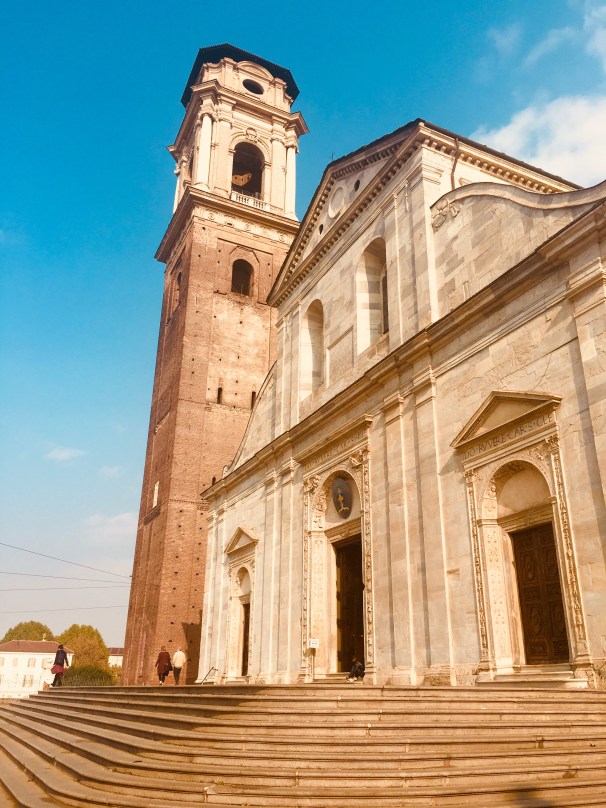
Duomo di Torino
Other city highlights included the Nietzsche marker we wandered by, for the philosopher had resided in Turin a while and wrote of it, I would have never thought that the light could make a city so beautiful; dogs large and small trotting prudently at heel; rows of tidy stalls selling handmade keepsakes (catnip to a souvenir-collecting tourist) and books. I managed to purchase, all by myself, an Italian translation of The Little Prince to accompany my French copy.
By then it was time for a little nourishment, so we stopped for coffee at the 19th-century Caffe San Carlo.
The uniformly industrial design of global coffee behemoths had nothing on cafes like this one. It had a chandelier glittering against powder-blue ceilings, gilt-edged mirrors reflecting velvety carmine chairs and marble-patterned table tops, and an air of well-worn elegance.
The espressos arrived with a handful of chocolates, a reminder that Turin was one of the most important cities in Europe for chocolate production, and had been since the 17th century.
Proper coffee and pedigreed chocolate: as an afternoon ritual, this certainly gave my revered teatime some robust competition.
Italy does spoil a person so in plenty of imperceptible ways, even if one must always be on the lookout for errant little cars that are likely to run one over.
Discover more from Cassandra Cuevas
Subscribe to get the latest posts sent to your email.
